
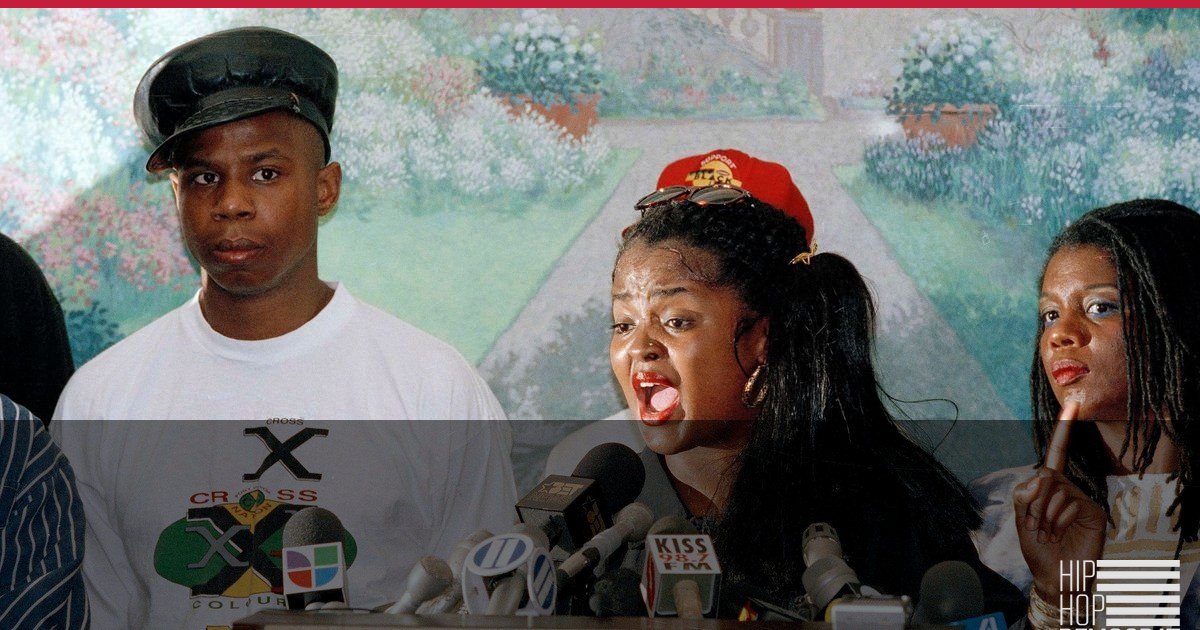
Go ask ten political operatives what a “Sister Souljah moment” is. Nine of them will give you a clean answer. Ask them who Sister Souljah actually is, what she built, what she wrote, what she organized, and watch the room go quiet.
That silence is the story. And in Women’s History Month, it is one we need to tell correctly.
The Culture Before the Controversy
Before Bill Clinton turned her name into a political term of art, Lisa Williamson was already doing the work. She grew up in New York and, by the early 1990s, was one of the most visible activists at the intersection of hip-hop and political organizing. She connected with Chuck D and Public Enemy, not as a background figure but as a peer, someone who understood that the culture had a megaphone and someone needed to point it in the right direction.
She organized housing and food programs for homeless youth in New York City. She lectured on college campuses. She put out 360 Degrees of Power in 1992, an album that made explicit what hip-hop had been building toward since the mid-80s: that our music was political whether the mainstream wanted to call it that or not.
This is the Sister Souljah that history forgot. Not because the work was not real, but because a presidential campaign found her useful in a different way.
What Actually Happened in 1992
The spring of 1992 was not a peaceful season. The acquittal of the officers who beat Rodney King triggered six days of uprising in Los Angeles that left 63 people dead, thousands injured, and over a billion dollars in damage. The country was raw. Every politician, every commentator, every cultural figure was being asked: what does this mean, and whose fault is it?
Sister Souljah gave an interview to the Washington Post in May of that year. In it, she attempted to articulate the logic and psychology of Black youth who had grown up watching Black people kill each other with no national outrage, only to be judged harshly for the violence that erupted when a jury looked at Rodney King on video and saw no crime. Her words were provocative. They were supposed to be. She was making an argument about selective moral concern, about whose deaths this country chooses to grieve.
Bill Clinton was at Jesse Jackson’s Rainbow Coalition conference on June 13, 1992. He was running for president, and he needed to signal to white moderate voters that he was not beholden to Black political leadership. He found his moment.
Standing at a podium hosted by Jesse Jackson, Clinton criticized Sister Souljah by name, comparing her remarks to the rhetoric of David Duke. Jesse Jackson, whose organization had invited Souljah to appear, was furious. Privately. Publicly, the centrist commentariat celebrated Clinton for his “courage” and his independence.
Political analysts coined a phrase: the Sister Souljah moment. It entered the textbooks. It gets taught in political science courses today. Candidates are still advised to engineer one when they need to triangulate their base.
The Mechanics of Erasure
Here is how the trick works. You take a Black woman, reduce her to a single quote stripped of context, use her name to perform your own moderation and reasonableness, and then let the phrase outlive the person it was taken from. The phrase benefits everyone except the person whose name it carries.
This is not ancient history. This is a playbook still being run. We watched it happen to Stacey Abrams, who built the voter infrastructure that flipped Georgia and spent years being celebrated for her service while being kept at arm’s length from the credit and power she earned. We watched it happen to Maxine Waters, whose “reclaiming my time” became a viral meme severed from the decades of work that gave those words their weight. Black women get called on to save coalitions they were never fully invited into, and then they get managed when they ask for anything in return.
The Sister Souljah moment was not an aberration. It was a template.
What She Went and Built Anyway
In 1994, Sister Souljah published No Disrespect, a memoir tracing her life, her politics, and her understanding of Black womanhood in America with unflinching honesty. In 1999, she published The Coldest Winter Ever, a novel that became a landmark of urban fiction, passed from hand to hand in communities that recognized the truth on the page before any major publisher gave it its due.
She kept writing. She kept building. She never waited for a rehabilitation from the political class that used her. She just did the work.
The irony is that her literary legacy reaches more people than most politicians’ entire careers. The Coldest Winter Ever travels the way certain albums travel: through barbershops and classrooms and correctional facilities and family dinner tables, because it tells a truth about Black American life that the mainstream is still not fully ready to fund or teach. Sister Souljah built something lasting. The people who borrowed her name for their political vocabulary mostly did not.
The Women’s History Month Question
Every March, we celebrate women’s contributions to American history and culture. We put up graphics. We share quotes. We run retrospectives on the names everyone already knows. And we tend to celebrate the versions of these women that are easiest to absorb: the triumphant moment, the quote stripped of its context, the name without the full story behind it.
Sister Souljah’s full story is Women’s History. The organizing, the writing, the refusal to be reduced, the work that continued long after the political class was done using her. That is the history worth teaching.
The phrase that carries her name is still taught in political science courses without the humanity of the woman who gave it. More than three decades later, we can do better than that. We should be able to say her name and follow it with her actual legacy, not just a definition that serves the people who borrowed it.
So here is the question worth sitting with this Women’s History Month: if we know the moment but cannot name the work, whose history are we actually celebrating?
